Writing TV Drama
Jesse Schwenk is part of our Drama Room writer development group for 2018. He looks back at the group's recent two-day workshop on writing TV Drama and shares loads of useful advice and information he picked up during the days.

is part of our Drama Room writer development group for 2018. He looks back at the group's recent two-day workshop on writing TV Drama and shares loads of useful advice and information he picked up during the days.
The writers on our Drama Room development scheme are identified through our open submission script room and other talent searches.
My dad looks at me suspiciously, 鈥楢 scheme?鈥� He says this like it鈥檚 something not quite legal.
鈥榊es Dad,鈥� I say, wanting to impress, 鈥業t鈥檚 the 91福利社, the 91福利社 Writersroom!鈥�
鈥楾he 91福利社?鈥� he says. I can see he鈥檚 having a think about this. But not about the enormity of the opportunity. No, he鈥檚 thinking practically.
鈥榃ell,鈥� he says, 鈥榃hat are you going to do?鈥�
鈥榃ell,鈥� I say, still eager, but not quite sure, 鈥業t鈥檚 - it鈥檚 writers' development, we鈥檒l - we鈥檒l be doing鈥� workshops鈥� and stuff. Things鈥� to make us better鈥� writers.鈥�
My voice trails off. My dad is still not impressed. To be fair, he鈥檚 83 and a mid-Westerner; born in Lincoln, Nebraska, USA in the 1930s at the height of the Depression. At heart, he鈥檚 a plainsman, and they鈥檙e never easily suckered. Scheme or no scheme, they just want to know what the bottom line is.
鈥楬mm,鈥� he says again (he鈥檚 still having a think). Then there鈥檚 a long pause, while he looks for something in what I鈥檓 saying that he can translate into his own estimation.
鈥楽o,鈥� he says, 鈥榊ou鈥檝e got yourself a job?鈥�
鈥楴o, Dad,鈥� I say quickly, 鈥楴o, there鈥檚 no job.鈥�
鈥榊ou鈥檝e won something?鈥�
鈥楴o.鈥� My voice trails away again, 鈥楴o, it鈥檚 not a prize either.鈥�
It鈥檚 no good. It鈥檚 not a job, it鈥檚 not a qualification, it鈥檚 not even an award. My dad can see that I鈥檓 really really excited about it, but I can鈥檛 persuade him of the use of doing a 鈥榮cheme鈥� - I can鈥檛 even tell him what I鈥檒l be doing on this scheme.
I鈥檓 a grown-up, for goodness鈥� sake. I mean, like I鈥檓 old. But let鈥檚 face it, deep down, in my heart, the bottom line is that I still just want to impress my dad.
So what have we been doing on this scheme?

Days Three and Four at New Broadcasting House focused on TV Drama, and, like , over the course of the two days we were introduced to a host of key players in the industry, from Script Editors, to Producers, to Heads of Development and Commissioning Editors, and we were taken through the various methods and means by which finished shooting scripts are created from the seed of an idea, through development, to commissioning, and eventually (hopefully) to production.
It鈥檚 a big ol鈥� complex system, and as my dad would say there鈥檚 more than one way to skin a cat, which means that in TV Drama every script idea has its own particular journey from germination to production. But these two days of masterclasses/workshops covered all the main points, and were brilliant at showing firstly, what鈥檚 involved in all the different possible stages of developing a script (and who鈥檚 involved in these stages); and, secondly, what the writer needs to be thinking about and focusing on at any (and every) particular stage.
The focus of the two days naturally gravitated towards what for a writer is the Holy Grail of TV Drama production, the 鈥極riginal Sole-Authored Drama Series鈥�. But what also emerged was the myriad of ways that a writer might be needed to work on TV Drama, from working on existing long-running shows, to collaborating with other writers in a US-style writers' room, to pitching germinal ideas to producers and production companies for shows that don鈥檛 yet exist.
Despite all these different ways of writing Drama for TV, part of what gets a writer noticed in the first place (and what brings the work) is their own personal vision or voice, which means coming up with sparky, original ideas that look like they could be developed into TV series. These are mostly expressed in ; and also in the that we鈥檙e writing while on this scheme. So naturally many of the sessions over these two days were geared towards the idea of the 鈥極riginal Sole-Authored Drama Series鈥� and the implications of this for the writer.

For example, script editor , who works extensively with writer (River, The Split), took us in detail through the work that a script editor does with a writer, in both the early stages of developing an idea (questions for the writer: 鈥榃hat do you want to say with this script?鈥�, 鈥榃hat fundamentally is this story about?鈥�), and then later, when drafting (e.g. - 鈥楲ook for the note behind the note.鈥�). Clare used her work with Abi on recent 91福利社 series The Split as a practical example, walking us through the early stages of her discussions with the writer, through the various stages of outline, treatment, script, and giving details to their approach to mapping out the series across 6 episodes: each character arc strand is worked out across all the episodes (鈥榮tory-lining鈥�), which then leads to an outline or treatment of each episode, and this leads to the drafting of each episode (Clare noted that 鈥榶ou can story-line, and then, when you script, the characters can do things and say things which make you return to the story-lining.鈥�). There was a sense of fluidity in the process, of weaving back and forth between the different stages, but the role of the script editor seemed crucial to a) bring out what is latent and potentially amazing in a script idea; and b) make sure the creative process stays on track, and arrives at a concrete end result in some kind of reasonable time-frame (notwithstanding the fluidity of the process).
touched on similar stages of development - outline, story-lining, treatment, scripting - but in the context of teaching us about an American-style writers' room; a collection or collaboration of a group of writers (there might be as many as 9 of them) led by a Head Writer (in some instances referred to as the 鈥榮how runner鈥�) and supported by writers in more junior positions (who may be, for example, taking notes of all the discussions). Ben gave us the detailed insider鈥檚 view of how this process works in practice, using as an example his experience on recent American TV series . At first, the idea of so many writers in one room, all trying to co-ordinate their creative vision into one perfect whole, may look intimidating (particularly to British eyes, where there is more of a tradition of the 鈥榣one鈥� author) but Ben showed us how this system or approach can work to create something as beautiful as anything that has come out of a solo writer鈥檚 head. Like the creative intimacy described by Clare Batty between writer and script editor, the same sense of respect and collaboration - of being open to the ideas of others, of welcoming the energy that different perspectives bring to the same idea 鈥� emerged from Ben鈥檚 description of an American-style writers room.
The basic technique used by a writers' room again seems frighteningly precise: there's a 鈥榖oard鈥� on the wall (a cork board) consisting of neatly organised blank postcards in rows; each postcard has written on it one scene precisely articulated in 3 sentences; each row of postcards represents an act; there are five rows in all - four acts and a teaser at the top of the episode. The structure of four acts might seem arbitrary at first but in fact it's necessary for the ad breaks. If the notion of squeezing an episode outline into this tightly-regulated board structure seems anathema to those who would prefer a messier, more random (or intuitive) creative process, Ben pointed out that in the American approach to writing TV drama there is as much respect for the craft of storytelling as for the art of it, and that the idea of the 鈥榖oard鈥� is to draw together and pull into focus the disparate, energetic ideas of many heads. He showed us in his session that the resulting episode outline can be as exciting and as powerful as any produced by the 鈥榮ole-authored鈥� method. We saw that, in fact, the finished board reads like an episode treatment (Ben pointed out that 鈥榓 very good board can eliminate the first draft of a script.鈥�)

If part of the job of a TV Drama writer is to come up with exciting new ideas for shows, the other part is to make strong and trusting relationships with producers and productions companies who might want to get these ideas made. Over the two days we met people from a number of different kinds of production companies who walked us through how they go about building these relationships. Sarah Stack, Head of Development from independent production company Kudos, described the kind of approach taken by a reliable, well-established 鈥榠ndie鈥�, and what to expect at different stages of the process: 1 or 2 page pitch or outline initially, before the idea is taken to the next stage; 鈥榙evelopment鈥� - working up to a series treatment/document and possibly an Episode 1 script; after which the idea may (or may not) be commissioned. A similar process of 鈥榩itch 鈥� development 鈥� commission鈥� emerged from all these conversations.
Esther Springer, 91福利社 Studios Executive Producer/Head of Development, explained to us the significance of 91福利社 Studios, which now as a production company is separate (in a legal sense) from 91福利社 Broadcasting and is therefore able to pitch for commissions to a much wider market than before. Rose Garnett, Director of 91福利社 Films, which has a slate of about 100 projects (1 in 8 get made), took us through the differences for a writer working on a feature as opposed to working on a TV drama (basically, in film, the director is more important in terms of creative vision than the writer). Also, we spent time with 91福利社 Senior Commissioning Editors Elizabeth Kilgarriff and Mona Qureshi, who gave an insight into the development process from the commissioning point of view. This is a slightly different perspective from that of production companies, as Liz and Mona are part of the 91福利社 Commissioning team under Controller Piers Wenger, and this is the department in the 91福利社 that makes the final decisions whether to 鈥榞reen-light鈥� a script to production or not. Liz and Mona work with producers and writers, commissioning either a treatment or a script, to bring an idea to the point where it can be put forward for consideration and hopefully green-lit. Their perspective therefore is very much coloured by the 鈥榩alette鈥� of drama that the 91福利社 is developing for broadcast in any given season, and they will be aware of other projects that 91福利社 Drama are already committed to taking forward.
If cultivating relationships with producers and production companies is key to a writer鈥檚 progress, then the ability to pitch an exciting, attention-grabbing script idea is key. For this , who leads , the Channel 4 screenwriting course, ran two workshops over the 2 days looking at what makes a standout pitch and what skills are required to deliver it. First, to clarify, this doesn鈥檛 mean pitching in the American-style stand-on-a-stage-in-a-spotlight-and-rattle-off-your-pre-rehearsed-2-min-patter. No, British-style pitching is much more nuanced. 鈥楬ave production companies asked you in for a 鈥榗up of tea鈥�?鈥� Philip asks us. (鈥榊es,鈥� some of us answer, 鈥楤ut we didn鈥檛 know what they meant.鈥�) Well, it turns out this mysterious 鈥榗up of tea鈥� is in fact a chance for companies to get to know a writer better (and for us to get to know them) and more importantly, this is the opportunity for us to pitch our best ideas, and persuade the company that we鈥檇 be good to work with. So be prepared. Forget the tea. Forget the cake even. In the end the very polite, British 鈥榃ould you like a cup of tea?鈥� masks the real bottom line in this situation (one that even my dad would be proud of) - 鈥楾ell me, what ideas have you got?鈥�
But Philip has bad news: over the past few years he has spoken to many newer writers about their work, but (he says) he鈥檚 heard very few good pitches from them. This, he says, is because a pitch is more than just a story, more even than just a subject or topic that a writer wants to write about: a pitch is a story with an idea behind it. Something bigger than just the particularities of the story; it鈥檚 the thing that connects the story directly with the audience; it鈥檚 the theme, the premise; the idea is what the story is about. Therefore, he says, in preparing our pitches, we should do some proper development on the idea first. It should be something that genuinely excites us, a story that we鈥檙e really keen to tell. Don鈥檛 arrive at your 鈥榗up of tea鈥� meeting with just scraps of ideas that haven鈥檛 been considered deeply. Philip is clear: 鈥楬ave your ideas ready and be excited about writing them.鈥�
With that, Philip hands us each two pages of newspaper and tell us to come back the next day with a pitch based on something that we鈥檝e read anywhere on these two pages. And make sure that the story has an idea behind it.
No pressure then.

I go home and sit on the bed and read my shreds of newspaper. I can鈥檛 think of anything. I read the bits of newspaper again. I can鈥檛 think of anything, again. I brick it. I climb under the covers whimpering, thinking about how I鈥檓 on this amazing writer development scheme, surrounded by clever people, and I鈥檓 about to reveal to the whole room how paltry, vapid and sterile my writerly imagination really is. And everyone in the room will know it when they hear my pitch, which, as Philip has promised, is bound to be not very good, if not outright awful.
I tell myself to stop being such a drama queen and get some sleep. I鈥檒l think about it in the morning. (Which I do.)
Naturally before I go to sleep I pray to my dad (who鈥檚 still alive so I guess I could鈥檝e phoned). 鈥楶lease, Dad,鈥� I say under the covers in a secret whisper, 鈥楶lease, please, please, tomorrow - don鈥檛 let me bring sh*t to the table.鈥�
The next day, I鈥檓 glad to say, Dad answers my prayers, and my pitch passes muster 鈥� in fact, all the writers around the table turf in a really good idea, with lots of zing and oodles of imagination. It鈥檚 the first time we (the Drama Room writers) have shared creative work directly with each other, and it seems to have a really good effect 鈥� we get an insight into how each other鈥檚 minds work, what lights us up as writers. (But I can see what Dodie Smith says is true, : there鈥檚 at least one idea in the room that I want to steal wholesale and write myself.) (Sorry I promise I won鈥檛.)
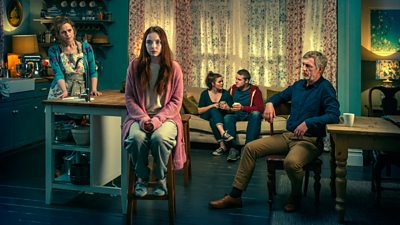
And lastly but not least, over the course of the two days we got to meet lots of working writers, all of whom are working in TV Drama in a variety of ways, and all of whom very generously shared their experiences, both good and bad, and gave advice: so a big shout out to , , , , and also to , who all gave freely of their time. Sophie鈥檚 and Marnie鈥檚 experiences were particularly interesting because they have both created, developed and written that elusive prize, the 鈥極riginal Sole-Authored Drama Series鈥� (Marnie wrote the hugely successful Thirteen, currently available on 91福利社 iPlayer as a box set; Sophie鈥檚 original series Blood will be available on C5/Virgin Media/Acorn). Both spoke of the pressures of solo-authoring an entire series, the sheer volume of work it takes, with added pressures such as re-writing once in production, or working as an executive producer as well as writer on the series. Marnie took us step by step through the whole process of creating Thirteen, from germination through to broadcast: this was incredibly helpful to see that while this kind of writing for TV Drama is an amazing artistic experience, it can also 鈥� whilst in production - eat your life. The funniest bit of advice came from Francesca Gardiner, who suggested that the most important thing for a TV writer to remember is: 鈥榞et some sleep鈥�.
It was an intense two days, and we covered a lot. I鈥檓 happy to say that after the 2nd day finished we ended up at the pub, where we had a much-needed drink, chat, breather and a chance to process what we鈥檇 just done.
So, Dad 鈥� that鈥檚 what we鈥檙e doing on this scheme.
To be fair, in the pub last week, my dad turned to me in a quiet moment (we were celebrating my nephew鈥檚 birthday) and said 鈥楾his - scheme you鈥檙e on鈥� you know, we鈥檙e proud of you.鈥�
And he smiled that lovely smile of his, his pale blue eyes.
I know. I鈥檓 being a child. I don鈥檛 need to impress my dad. Not anymore.
Find out about the Drama Room and
, including , and
including House of Cards
Latest blog posts
More blog postsSearch by Tag:
- Tagged with Blog Blog
- Tagged with Drama Room Drama Room
- Tagged with 2018 2018