
Final years - hubris and charity
Donald Macleod explores the final years in the life of Leonard Bernstein, when his behaviour became more erratic, but he also became more active in his work for charitable causes.
Donald Macleod explores the final years in the life of Leonard Bernstein, when his behaviour became more erratic, but he also became more active in his work for charitable causes.
Donald Macleod explores the life and music of Leonard Bernstein - one of the most iconic personalities in the musical life of America, and a key figure in the formation of the cultural identity of the United States. Over the course of this week, Donald discovers how Bernstein rose to conquer both the concert hall and the Broadway stage, and succeed both as conductor, and, more importantly for him personally, as composer.
We will explore Bernstein鈥檚 whirlwind life. A journey from a cocksure teenager giving piano lessons in his local neighbourhood to his studies at Harvard, where the connections he made 鈥� with the composer Aaron Copland and the conductor Dimitri Mitropoulos - prepared him, not as his father hoped, for a career in business, but instead for a life in music.
Donald also explores Bernstein鈥檚 friendship with the conductor Serge Koussevitsky and the events that led to his headline-grabbing success as a stand-in conductor for Bruno Walter in his mid-twenties. We'll also hear about his rise to prominence as a composer during the days of the Second World War with a pair of Broadway scores.
Donald also details Bernstein鈥檚 conflicted personal life 鈥� from his marriage to the actress and TV star Felicia Montealegre to his own TV career and his social life mixing with the celebrity set of New York City. And we鈥檒l find out how his marriage hit the rocks as he underwent a difficult period in his personal life, like his hero Mahler, 鈥渓ike being two different men locked up in the same body鈥�.
In Friday鈥檚 programme, Donald explores the final years in the life of Leonard Bernstein, when, following the death of Felicia, Bernstein鈥檚 behaviour became more erratic, as he began self-medicating with alcohol and prescription drugs. However, he also became more active in his work for charitable causes, including memorable concerts to mark the fall of the Berlin Wall and the outbreak of World War II.
His compositions of this last period are more sporadic and more autobiographical in tone, including the opera 鈥淎 Quiet Place鈥� and 鈥淎rias and Barcarolles鈥�. However, the frenetic pace of his life didn鈥檛 slow down, with an almost constant stream of trips abroad to conduct.
Four Anniversaries 1. For Felicia Montealegre
Katie Mahan, piano
Quiet Place: Postlude
Montreal Symphony Orchestra
Kent Nagano, conductor
West Side Story 鈥� Tonight
Jos茅 Carreras, tenor (Tony)
Kiri te Kanawa, soprano (Maria)
Leonard Bernstein Orchestra
Leonard Bernstein, conductor
Concerto for Orchestra 鈥� 3rd and 4th movements
Nathan Gunn, baritone
New Zealand SO
James Judd, conductor
Chichester Psalms
David Allsopp, countertenor
Tenebrae
91福利社 Symphony Orchestra
Nigel Short, conductor
Arias and Barcarolles (arr. for orch): VIII. Nachtspiel (Postlude)
Isabel Leonard, mezzo-soprano
Ryan McKinny, baritone
San Francisco Symphony Orchestra
Michael Tilson Thomas, conductor
Producer: Sam Phillips
On radio

More episodes
Next
You are at the last episode
Broadcast
- Fri 3 Jul 2026 16:0091福利社 Radio 3
Beethoven Unleashed 鈥� the box set
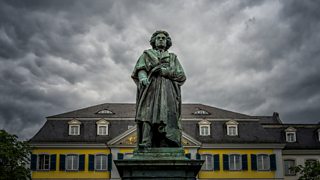
The complete set of Radio 3 Beethoven Unleashed podcasts, with Donald Macleod.
What was really wrong with Beethoven?

Georgia Mann and neurosurgeon Henry Marsh examine the composer's numerous health problems
Composers A to Z

Visit the extensive audio archive of Radio 3 programmes about Composers and their works.
Who knew? Five eye-opening stories from Composer of the Week

The production team reflects on 5 of Donald Macleod鈥檚 best stories from the last 20 years
Five reasons why we love Parry's Jerusalem
What is the strange power of Jerusalem which makes strong men weep?
A man out of time 鈥� why Parry's music and ideas were at odds with his image...
The composer of Jerusalem was very far from the conservative figure his image suggests.
Composer Help Page
Find resources and contacts for composers from within the classical music industry.