Poker and Rugby: The Blind Way
A visually impaired poker competitor tells us how he plays the game; and a new form of rugby known as hugby is trialled in the West Midlands.
How do you compete in a poker tournament when you can't read the cards? Visually impaired competitive player Steve Iglesias shows us how.
After losing all or partial vision, many people struggle to get back in to sport. The Warriors Inclusive Rugby Club in the West Midlands has devised a game called Hugby which tries to cater for all levels of vision. And, as the name suggests, involves holding or "hugging" your opponent instead of tackling.
Reporter Dave Williams went along to find out more about it.
The British Wireless for the Blind Fund has released a free device on which a set of apps called Bumblebee will let you play radio stations, listen to audiobooks and other online content by using only speech commands. Margaret Grainger from the Fund, tells us who is most likely to want to use Bumblebee. The RNIB have a similar product called 'RNIB in Your Pocket' and there is also a commercially assailable device called Synapptic which offers similar functions.
Producer: Lee Kumutat
Presenter: Peter White.
Last on

More episodes
Previous
In Touch Transcript: 10-10-2017
THIS聽TRANSCRIPT WAS TYPED FROM A RECORDING AND NOT COPIED FROM AN ORIGINAL SCRIPT. BECAUSE OF THE RISK OF MISHEARING AND THE DIFFICULTY IN SOME CASES OF IDENTIFYING INDIVIDUAL SPEAKERS, THE 91福利社 CANNOT VOUCH FOR ITS COMPLETE ACCURACY. IN TOUCH - Poker and rugby the blind way
TX: 10.10.2017 2040-2100
PRESENTER: PETER WHITE PRODUCER: LEE KUMUTAT
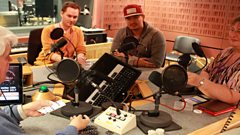
White Good evening. Tonight, we鈥檝e got a complete studio full and we鈥檙e going to need them all. We鈥檒l be talking about books and newspapers, apparently available with one word from you. A form of rugby designed for blind people to play. And there鈥檚 already a bit of a card school going on here. So who鈥檚 going to deal? This isn鈥檛 the proper way to do it, if you鈥檙e actually running a proper tournament, but Margaret Granger, as you鈥檙e here鈥� Granger
Yes I鈥檒l deal.
WhiteOkay, okay, give them a shuffle first.
GrangerRight.
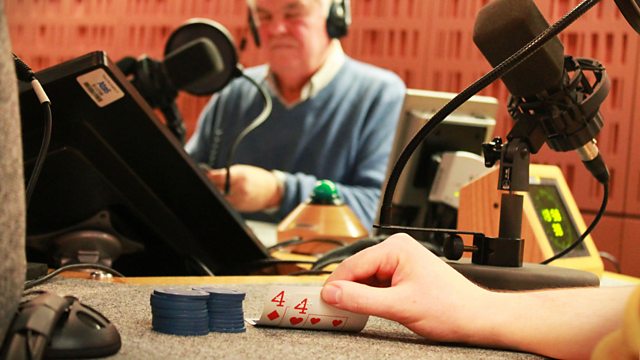
WhiteOkay. And if you start to deal. What we鈥檙e really trying to establish here is how you play tournament poker if you鈥檙e blind, but the rules won鈥檛 allow you to use a braille pack of cards. So, everyone, we鈥檝e had our cards dealt 鈥� I can鈥檛 find mine but never mind 鈥� there they are, good. So we鈥檝e had three cards dealt here and we will be playing this game and talking to Steven and Daniel about how they play this game together a little later on. So hold your cards for a moment guys and Steven will be explaining how we do this in a few minutes.
But first, time was when the British Wireless for the Blind Fund was literally what it said on the tin, it provided free radios for blind people and indeed it still does. But technology has moved on and they鈥檝e moved with it. And their latest scheme is one which they hope will allow people to access a range of books, newspapers, radio stations and other audio material using just a tablet, a tap of your finger and a voice command.
Well Margaret Granger is here from the fund. Just explain a bit more about what this scheme involves.
GrangerWell Bumble Bee is a specially developed suite of apps, designed to bring the world of audio to visually-impaired people. We had a look at the national statistics and people who are over the age of 75 who have already lost their sight, according to the national statistics on broadband use, 75% of them do not use the internet. However, if we look at those aged 65 to 75 who鈥檝e already lost their sight or maybe losing their sight or have the potential to lose their sight, 75% of them do use the internet.
WhiteSo you鈥檙e trying to provide something for this generation now which is not comfortable with the internet and I understand from the stats doesn鈥檛 really plan to become so.
GrangerThat鈥檚 true but also the young at heart 鈥� the 75 plus 鈥� who have no experience of the internet we want to engage with them and help them learn and understand because it brings so much to people that we feel they should have the opportunity to look at it.
WhiteSo that鈥檚 who it鈥檚 aimed at and exactly what will they be able to access?
GrangerWell on our suite of apps we have books, local talking newspapers, we have a community section and podcasts 鈥� all sorts of things they can listen to 鈥� as well as radio which we鈥檙e known for.
WhiteAnd when you say community section I gather the idea of this is that it鈥檒l kind of be some kind of closed system where people can talk to each other?
GrangerAbsolutely, we鈥檙e still building it at the moment, although the app is available, and what you can do is leave an audio message and it will be available under certain titles and then people can talk to each other in a safe environment because you don鈥檛 actually know who else is there 鈥� what their name is or their address or anything like that.
WhiteNow it鈥檚 interesting that you鈥檙e doing this because it is a departure from what you鈥檝e done in the past, although you have been streaming things, but you鈥檙e not alone in this field are you, the Royal National Institute of Blind People is now offering RNIB in your pocket, which gives people its own very large talking book collection鈥�.
GrangerThat鈥檚 right, yes.
White鈥nd also newspapers and magazines and more besides. There鈥檚 also Synaptic, which is a commercial system, have you rather missed the boat?
GrangerI don鈥檛 think so. I think we have more content on our suite of apps than anybody else because we have local talking newspapers, we do have books 鈥� they are eBooks 鈥� although we are wanting to increase to human voice. So we do 鈥� and podcasts as well, of which there are hundreds of thousands.
WhiteBut of course the audio 鈥� the biggest audio library specifically for blind people is the RNIB one, have you got them?
GrangerWe haven鈥檛 got them, we would love to have their books on our app, the door is always open.
WhiteWon鈥檛 people who aren鈥檛 yet online find their own solution rather than one built for them?
GrangerWhat we鈥檙e aiming for is people who like the idea, can鈥檛 afford it themselves and we give them an opportunity with a free piece of equipment to access all the audio.
WhiteAnd I suppose that is important, you are a charity and it is free.
GrangerAbsolutely, we help the people who are most in need.
WhiteRight, let me bring in David Williams, he鈥檚 here to tell us about this new form of rugby for blind people but David you鈥檙e also an independent trainer on assistive technology. What do you make of this idea?
WilliamsI certainly recognise the problem that you describe 鈥� the over 75s perhaps missing out. Many of those people obviously just don鈥檛 have an appetite for anything new, I can imagine taking a new gadget to my gran and she鈥檇 just say take it away David, I just don鈥檛 want to know. And then I鈥檓 listening to you talking and I鈥檓 trying to grasp what it is you鈥檙e describing here, so it鈥檚 going to be even harder then. So it鈥檚 a suite of apps but then there鈥檚 a piece of equipment?
GrangerWe provide the suite of apps on a piece of equipment鈥�
WhiteHow much demand do you anticipate for this?
GrangerWell if I can just say that our service is standard against radios and this equipment and we provide all the training completely free of charge until the person is comfortable using it. We鈥檙e aiming for up to 5,000 over the next five years to be available.
WhiteOkay let鈥檚 just leave it there but don鈥檛 go away Margaret Granger because you鈥檙e going to need your poker hand in a minute. But not before we鈥檝e found out about another potentially dangerous game. Most sports have been adapted for visually-impaired people, but rugby?! Well, it鈥檚 happening and Dave Williams you went along last night in Worcester to see it in action.
WilliamsI鈥檓 standing in the corner of the pitch at the Worcester Warriors Rugby Club and I鈥檓 with a group of blind and visually-impaired players who are just engaged in a warm up exercise for a VI version of rugby known as hugby.
ActualityOkay so you鈥檝e got Colin you know through cricket, Millie you know from cricket鈥�
WilliamsWhy is it called hugby?
Worcester playerBecause when you tackle you鈥檙e effectively doing that 鈥� hands around the back, slowly, it鈥檒l stop your opponent鈥�
WilliamsOkay.
Worcester player鈥ather than grabbing them by the waist or taking them down.
WilliamsSo that鈥檚 a standard rugby ball size and then there are bells inside it?
Worcester playerThey are, yeah, little bells.
WilliamsNow you said it was high-vis.
Worcester playerYeah so it鈥檚 fluorescent. It鈥檚 got a stripe of blue on it but it鈥檚 mostly fluorescent with black markings.
NorthcottWe started off with a green colour which was great until the ball hit the floor and then we started looking at this yellow ball and then that was it, it sort of stuck really.
WilliamsSimon Northcott is the disability lead with Worcester Warriors Rugby Club. Simon has set up hugby training sessions in Wolverhampton, Telford and Worcester, attracting players from across the West Midlands. As with other visually-impaired sports players fall into five sight categories with B1 players having the least sight.
NorthcottStafford had a coach who had 95% sight loss and she wanted to have an outlet for when her sight goes completely, so we sat down one morning and we talked about how we can devise a game for the visually-impaired and we worked with the local New College at Worcester and slowly but surely we became the model we鈥檙e now at, which is a seven-a-side format with an inclusive side where you can have older people playing, younger people playing and all the way across the B1 to B5 spectrum.
Worcester playerBecause it has the ball bearings in it and also the battle, it鈥檚 brilliant for when it stops dead on the floor because the battle still keeps going afterwards.
ActualityOkay so we鈥檙e still going to clap our hands, we鈥檙e still going to move the ball along the line, alright and we鈥檙e going to walk forward as we do so.
WilliamsSo what鈥檚 the purpose of this exercise now?
NorthcottIt鈥檚 to get used to passing the ball backwards but moving ourselves forwards鈥�
WilliamsRight okay.
Northcott鈥ecause obviously some guys have never played rugby in their lives so this is a new concept of walking forward or running forward and passing backwards.
WilliamsWorcester Warriors is not the only organisation offering hugby. The Change Foundation supported an England hugby tour to New Zealand in July. There鈥檚 talk of a six nations and even a hugby world cup. But Simon believes that the Worcester model offers something different.
NorthcottOur model is more, for me, more inclusive, it鈥檚 to give everyone an opportunity to play it. Rather than turning it into a really competitive game of rugby what we want to do is allow people to explore rugby and then maybe get signposted to the Change Foundation model.
WilliamsWhile all players have some visual impairment, some have additional disabilities, for example Rob is severely hearing impaired.
RobI like football but with blind football the ball鈥檚 always on the ground, so it鈥檚 difficult to hear the ball I think, I can only hear if somebody talks really close.
WilliamsSo potentially this could be a bit more accessible for you then if the ball is a little bit more round head height?
RobYeah I think like I鈥檓 hearing the ball, it鈥檚 all new, so it鈥檚 all about sort of getting used to it and being confident you know.
WilliamsBarriers to participation in sport are often encountered before we get near the field of play, as Lucy explains.
LucyConfidence is a major issue, even just going to their local gym or something because they鈥檙e worried people will think they鈥檙e different. And also transport鈥檚 another big issue. Like today I鈥檝e had a lift up here but I鈥檓 probably going to have to get a taxi back because it鈥檚 dark now, so walking back wouldn鈥檛 be an option, I just wouldn鈥檛 feel safe walking back the quickest way that I know.
ActualityMillie.
NorthcottWe鈥檙e just going to do some hug practise.
WilliamsWhen you tackle a player you essentially put your arms round their shoulders?
NorthcottYeah it becomes a hug if you like, it鈥檚 to try and stop the progress but to make it a little bit more than just a touch game.
WilliamsHow do you manage the health and safety aspect, I mean you must get collisions of heads and things like that?
NorthcottYeah we鈥檝e put risk assessments in place. We talk to each player to find out what their skill levels are but ultimately it鈥檚 a game 鈥� it鈥檚 a physical game that we can鈥檛 get around, it will be physical, somebody will get hurt, there鈥檚 no getting away from that but what we do need to do is minimise the amount of head knocks.
WilliamsDo you understand the rules?
LucyKind of. Getting into rugby was tough but I kind of understand it.
WhiteThat was Lucy ending Dave Williams鈥� report. And Dave, so did you get a taste for it, do you think you鈥檇 play?
WilliamsI did get a taste for it, I have to admit to feeling a little bit self-conscious hugging strangers in the middle of a field but on a serious note I really think this is one to watch. We hear a lot about elite sport and actually it鈥檚 what鈥檚 happening at grass roots that is really interesting and anything I think that gets blind and partially-sighted people outdoors and doing something physical 鈥� it鈥檚 got to be a good thing.
WhiteDave Williams thank you very much indeed.
Now, Steven Iglesias prefers his games a little less physical. He鈥檚 in London for a poker tournament, the 888 Live Festival London tournament, which is all fine but two and a half years ago Steven lost his sight and therefore he鈥檚 had to adapt his method of playing. Stephen, explain what you have to do now.
IglesiasYeah hello, awesome to be here. So right now I鈥檓 playing poker with my friend Daniel and the way we play poker now is quite different from everyone else. Daniel is whispering my cards to my ear and he鈥檚 also telling every action 鈥� what players are doing at the table 鈥� and I鈥檓 doing all the decisions and I鈥檓 telling Daniel what to do with my chips.
WhiteNow there are of course tactile cards and that鈥檚 where we changed the rules here, you can鈥檛 use tactile cards, we鈥檙e saying you can鈥檛 use only print cards, you鈥檝e got to use tactile cards because it鈥檚 In Touch but was that ever an option for you?
IglesiasLike braille cards?
WhiteYes.
IglesiasIt鈥檚 just three years ago since I lost my sight, so I haven鈥檛 learned how to use braille yet.
WhiteRight. So you decided you needed to 鈥� you wanted to go on playing because this is quite big money, you can win quite a lot can鈥檛 you.
IglesiasYeah, yeah you can win a lot but it鈥檚 more about the game of poker, like I love the game. Of course I love money too but it鈥檚 such an awesome game, like I love the strategy aspect of the game. So that鈥檚 why I still play.
WhiteWell also with you is Daniel Grytten and we dealt a hand to three of us at the beginning of the programme. Just show us, Daniel and Steven, show us what you do.
GryttenYeah like first I look at the cards he鈥檚 dealt and I whisper to him what his cards are.
WhiteWell go on then, whisper to him.
GryttenRight.
WhiteI suppose it would spoil it if I asked you what you said.
GryttenI鈥檒l do it here though, I whisper to him in a reason though 鈥� like he had 鈥� like his cards is Jack, four of suits.
IglesiasThat鈥檚 a pretty bad hand so I would probably just throw it away and wait for another hand.
WhiteBut how do you 鈥� it gets more complicated than that. Do you just keep this information in your head Steven?
IglesiasYeah of course, you have to have a good memory because poker is a lot about reads 鈥� you have to know your opponents and even though I throw away my cards I still have to pay attention because Daniel is like a commentator, he鈥檚 telling every action from every seat, he鈥檚 going from seat one, seat two and he鈥檚 telling what they鈥檙e doing. So I have to memorise what they鈥檙e doing.
WhiteRight and Daniel it鈥檚 not just about what cards they鈥檝e got presumably, it鈥檚 about how they 鈥� yeah 鈥� so tell me the kind of things. I mean I鈥檝e got some cards here, how am I looking, I am a bit distracted presenting a radio programme but just explain what鈥檚 going on.
GryttenYeah like usually I鈥檓 not allowed to tell like the player鈥檚 reaction or how they look because I鈥檓 not allowed to influence Steven鈥檚 decisions. So the only thing I鈥檓 allowed to say is like what they鈥檙e actual actions are, like how much they bet and how much chips do they have behind.
WhiteBut doesn鈥檛 that put you at a real disadvantage Steven because surely this is so much about body language isn鈥檛 this and how people are looking and things like that. How do you do deal with that?
IglesiasLike before I lost my eyesight I was only playing online poker, I didn鈥檛 like travel around to play live poker. So for me it鈥檚 almost still as playing online poker because I can鈥檛 see the players, just like online I can鈥檛 see anyone. But I still have to remember like all the betting patterns and like how they鈥檙e playing each situation. So I can still tell who鈥檚 a good player or who鈥檚 a bad player.
WhiteOf course there鈥檚 also a lot of noise in tournaments, there鈥檚 a lot of stuff going on, so how much of a problem is that?
IglesiasUsually there鈥檚 no problem, sometimes there might be a problem, especially if I play with friends back home because then some of my friends are drunk and like shouting and then I have to like tell Daniel like four times can you tell me my cards again, can you tell my cards again, can鈥檛 hear. But when I play like around the world there鈥檚 usually not a problem.
WhiteWas there a problem about the idea that you would have somebody actually talking to you in the tournaments themselves?
IglesiasI didn鈥檛 think that they would allow us to do that but at first we went to the Norwegian championships and they said it was completely fine鈥�
WhiteReally?
Iglesias鈥eah there were other blind players who were playing before me.
DanielVisually-impaired not blind but yeah.
IglesiasYeah visually-impaired yeah.
WhiteRight and they didn鈥檛 say hang on you can鈥檛 do that because you鈥檝e got somebody actually giving you information as you play?
IglesiasThere are some players who sit at the table and like ask the dealer why are they allowed to do that, they鈥檙e like playing together, that can鈥檛 be right.
WhiteBut the ruling body has allowed it?
IglesiasYeah as long as Daniel is sticking to the rules and the rules is that I鈥檓 doing all the decisions and Daniel can鈥檛 influence my decisions.
WhiteAnd just finally, how good are you because there is money to be won here isn鈥檛 there, quite good money, how much have you won and what鈥檚 your biggest win?
IglesiasMy biggest win so far is actually after I lost my eyesight. I went to Las Vegas now this summer and I won $25,000. So that鈥檚 my biggest win.
WhiteWell the very best of luck Steven and Daniel and thanks for coming over a day earlier to talk to us. And my thanks too to Margaret Granger and Dave Williams for also becoming temporary card sharks.
If you want to comment on or query anything in tonight鈥檚 programme you can call our actionline for 24 hours afterwards on 0800 044 044. You can email intouch@bbc.co.uk or you can go to our website and click on contact us, that鈥檚 www.bbc.co.uk/intouch, from where you can also download tonight鈥檚 podcast. And that鈥檚 it for today. From me, Peter White, producer Lee Kumutat and the team, goodbye.
Broadcast
- Tue 10 Oct 2017 20:4091福利社 Radio 4
Download this programme
Listen anytime or anywhere. Subscribe to this programme or download individual episodes.
Podcast
-
![]()
In Touch
News, views and information for people who are blind or partially sighted