09/08/2016
Tom Holland discusses the first farmers, fighting the Battle of Marathon - in Salford, and the forgotten father of global communications.
Tom Holland considers historical revelations with a resonance today. He's joined by two archaeologists - Professor Carenza Lewis from the University of Lincoln and David Miles, the former Director of Archaeology and Chief Archaeologist at English Heritage.
As combine harvesters tear into Britain's corn crops, David Miles takes us back to the birth of farming and the transformational period that was the Neolithic.
Iszi Lawrence changes into her running gear to recreate the Battle of Marathon - in Salford. Can historians and sports' scientists work together to solve a mystery surrounding this famous victory of the Greeks over the Persians which continues to puzzle historians?
Think British steel and its places such as Middlesborough, Sheffield and Port Talbot that come to mind. So why is Helen Castor in Clerkenwell? Professors Chris Evans and David Green give her a guided tour of one of Britain's earliest and most important centres of steel production.
And Professor Simon Schaffer at the University of Cambridge tells us why the Danish scientist Hans Christian Oersted should really be on the People's Plinth.
Producer Nick Patrick
A Pier production for 91福利社 Radio 4.
Last on

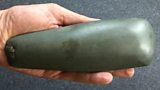
A Neolithic hand axe
More information
Making History - web links Tuesday 9th August 2016
听
Tom Holland and guests return with a new series of the topical history programme.
听
Joining Tom is the archaeologist and Professor of Public Understanding at the University of Lincoln听
听
David Miles, former Chief Archaeologist for English Heritage and author of听 The Tale of the Axe: How the Neolithic Revolution Transformed Britain
听
The Battle of Marathon
听
As the Rio Olympics get into full swing, Iszi Lawrence takes us back to Ancient Greece and the battle which, legend has it, gave us sports鈥� most iconic and gruelling events - the Marathon. It鈥檚 unlikely that the Greek messenger Pheidippides really did run twenty-six plus miles back from the site of the Athenians surprise victory over the Persians. But, their victory was a shock. Herodotus, widely seen as the world鈥檚 first historian, claims that the Greeks ran almost a mile before attacking their enemy. Could an army of men really do this, carrying weapons in the burning heat of an Athens summer?
听
The team at the University of Salford Department of Sports鈥� Science and Ancient Historian Dr Jason Crowley at Manchester Metropolitan University put Iszi through her paces to see whether this was possible.
听
Further Information
听
The Battle of Marathon听
听
Dr Jason Crowley
听
Human Performance Laboratory, University of Salford
听
The Advent of Farming
听
David Miles鈥檚 new book covers the period of the first agricultural revolution, the Neolithic; the period when humans switched from foraging to farming. This first Hans Christian OerstedHans Christian Oerstedhappened in the Near East about 12,000 to 10,000 BC and then spread gradually across Europe. Climate change was the main driver, removing existing sources of food and encouraging people to experiment with crops. These experiments then had unintended consequences, not least in the genetic changes to plants. In turn, populations grew which fuelled the migration of people as resources became stretched.
听
The story is told in The Tale of the Axe: How the Neolithic Revolution Transformed Britain ISBN-13: 978-0500051863
听
Further Information 听
听
91福利社 History
听
Images of Neolithic tools
听
National Geographic听
听
听
The Making History Plinth
听
Simon J. Schaffer Professor of the history and philosophy of science at the Department of History and Philosophy of Science at University of Cambridge picks Hans Christian Oersted the Dane who discovered electro-magnetism.
听
Further information
听
Famous Scientists听
听
American Physical Society
听
听
Making History is a Pier Production for 91福利社 Radio 4
听
Email making.history@bbc.co.uk
听
#MakingHistory
Broadcast
- Tue 9 Aug 2016 15:0091福利社 Radio 4