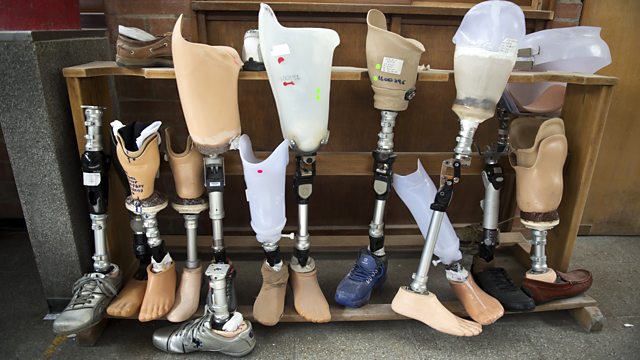
Amputation
Should a surgeon agree to a woman's request to amputate her leg? She is refusing offers of yet more surgery to fix her painful and injured knee. What should this surgeon do?
A dilemma arises for a surgeon when a young woman called Sarah is referred to his clinic.
Six years earlier, Sarah injured her knee in a skiing accident and the intervening years have been dominated by operations to repair her knee, each followed by months of gruelling rehabilitation.
But despite all this, Sarah's knee remains unstable and painful and it's taking its toll on her mental health.
Various surgeons have refused to amputate her leg and recommend that she either accept her existing level of disability or agree to further operations.
But Sarah is adamant - she wants her leg amputated. She doesn't want to live as she is and has lost faith in the medical profession's ability to give her a knee that will enable her to be active.
The surgeon is caught in a dilemma - he appreciates how she feels but should he amputate her leg?
Joan Bakewell and her panel discuss the issues.
Producer: Beth Eastwood.
Photo credit: EITAN ABRAMOVICH/AFP/Getty Images
Last on

More episodes
Previous
You are at the first episode
Next
The Panel
Steve
Mannion
Orthopaedic and Trauma Surgeon, Blackpool Teaching Hospitals
听
Andrea
Adeleanu
Clinical Psychologist, Surrey & Borders NHS Foundation Trust
听
Deborah
Bowman
Professor of Ethics and Law at St George鈥檚 University of London
Your Comments
---
听
I have only been able to listen to the whole programme this evening. I looked at the comments on your site and wanted to add mine. But it seems that the facility is no longer available for 2nd-time listeners. Could you possibly consider leaving the "comments" open longer.
听
My comment would have been:听
I was/am totally stunned by the lack of empathy of doctors, surgeons and the other comments from the site. It seemed to me that no one really looked at Sarah's problem from her point of view, or tried to understand her pain and depression.
听
What a saga of egos and playing God, with individuals seeming to want to 'have a go' at yet another attempt on operating on that young woman or changing her mind. And all that awful jargon.
A really shocking little glimpse to me of medical minds - and the general public.
听
Well done and good luck Sarah, and thanks for an enlightening programme.
(Janet Skea)
听
听
---
听
听
I could completely understand where Sarah was coming from. The problem seems to me that unless one can experience similar predicaments it is impossible to know what life is like when living with extreme discomfort/pain 24/7. She persevered with operations none of which helped. How many repeat procedures must she endure giving her false hope each time and each time sapping her confidence?
You have to live it to know. Doctors however professional, can not feel the the things Sarah has to endure day after day.
Writing with experience it is easier for me to empathize. Daily living can become increasingly burdensome.
Doctors obviously want to help but they need to really listen and try to imagine themselves in a similar position. It is easy to advise people about what they should or should not do. Advise is easy for anyone to give, but if you were in Sarah's place then that would be different wouldn't it ?
(Fiona Mather)
---
As a Dance movement therapist I listened to this programme with interest. I had a similar injury 10 years ago, in the middle of my dance therapy training which resulted in a slight misalignment in my left leg. In no way was it as severe as Sara's injury or it's consequences. However, I am aware that having 听danced all my life and therefore with a relationship to my body which gave me a perception 听of being connected and in control made a big difference to my attitude towards rehab and the consequences.听 听It seemed to me, listening initially to the programme that there seemed to be an underlying unacknowledged hurt that exacerbated Sarah's suffering. In no way do I think her response was unwarranted, but the lack of agency, of being in control of decisions about her own body and life were surely making the experience even worse (and undoubtedly connecting to life experiences at the root of her mental health problems in the past.). Of course as a dance movement therapist, I wonder if a more body-based approach to her therapeutic support may not听have听helped her to gain a little more understanding and confidence .听 I am sure that now she is again in the ' driving seat' she will be听able to rebuild her听life听with renewed confidence and sense of self-worth.
(Helen Dexter)
Hi, I listened with interest today re amputation. I lost my limbs due to meningitis 5 yrs ago at the age of 54. The specific feedback I'd like to give is re exploring expectations of mobility after surgery and the provision of prosthetic limbs.听 I have 3 NHS limbs that allow me to walk, drive, work (all limited) but I know that if I could afford to go private I could have much more ability.
I didn't hear in the analysis the expectations needing to consider the limit to resourcing via the NHS for prosthetics....waiting times etc etc. My expectations were high but I soon learnt not to expect more than the NHS could provide. For example the new digital hands look fantastic but I don't spend time looking at articles about them as I'm not able to fund one. I have to use what I'm provided with to gain some function of my missing arm. 听I know there are movable ankles but there is no funding so stairs, slopes are all tricky with fixed metal ankles.
The context of limited resources and cut backs has to be part of the discussion as that's the reality for amputees in civilian life.
Thanks
(Liz Curry)
听
---
听
I have just listened to your program about the young lady who had her leg amputated for chronic knee ligament damage.听 I am a GP in the NHS & am horrified that she managed to persuade the surgeons to amputate her otherwise good leg. I listened to the whole
program before emailing you. I am very concerned for a number of reasons;
1) I didn't hear any other option discussed with her other than arthrodesis (fusing the knee), what about a knee replacement? This would have given her less pain, a functioning knee & allowed her to get back to the sports she wanted to do & I would suggest would have been better than a prosthesis,
2) As you pointed out in your program, she spent 5yrs without any exercise but didn't do any disability sport, eg wheelchair ones, why did she not do or be supported in anything like this?
3) I am very worried about this aspect of "patient empowerment" (a principle I do generally support). The NHS is there for provision of medical care with clinicians providing advice so that patients can make an appropriate informed choice, yes, but the NHS is not for doing just what a patient has decided that that is what they wants whatever, which was unfortunately what came over in this program,
4) We work in a cash limited service that has to save billions of 拢 this year and also improve services for lots of groups of patients especially Dementia etc. Inappropriate treatments should be limited. I accept I haven't done the actual sums for whether 拢 would be saved in the long term but short term we are short of 拢.
I don't usually respond to programs I hear but felt so strongly after listening to your program this morning. I do thank you for airing it though. I don't expect a response as I anticipate there may be a number of polarised views on this subject.
Thank you. Best wishes,
(Dr Stephen Riley, GP Nottingham)
听
---
听
Hello, just listened to 'inside the ethics committee' on amputation.听 I am concerned that no-one seemed to address the very basic of healing which is nutrition.听 I would have liked to see someone try putting her on a gluten free diet to calm the nerves and a high protein diet for healing bone with a supplement of green lipped mussel to rebuild ligaments, plus Vit D.听听 As a sufferer of a recently broken ankle I know that all of this is necessary to aid healing. The body needs to be given optimum conditions to help itself. The medical profession under the NHS never consider this. Drugs or surgeons or psychiatry are always the first line of defence. Nutrition is not pseudoscience鈥�.we are all made of umpteen chemicals as is our food!!
(Alex)
听
---
听
Goodness - how much has this whole procedure cost the nhs?
(Mary)
听
---
听
Hi there, I have to say that was an excellent article and a subject close to my own heart.听 My left leg was badly broken in my 20s and I have had multiple surgical procedures in an attempt to repair 14 separate breaks, including bone grafts. The surgeons actually 听recommended several times that my leg would be best amputated at the knee and came close to necessity several times due to subsequent infection. One surgeon also cut through my sciatic nerve whilst repairing my femur, meaning I lost all feeling and movement below the knee.
20 years on and my leg troubles continue, but it has become an issue of intense personal triumph that I keep my own leg, despite the fact my life would certainly be easier with a prosthesis. I was also highly active as a young man, having served as a soldier, and I still manage to run and have even boxed competitively for some time despite my severely damaged leg.
Thank you and good luck, Sarah, that was a very brave decision and was inspiring to hear her courage.
(Marc Riley, London)
听
---
听
I had a snowboarding accident, had 15 operations and several reconstructions. I then chose to have my leg amputated.听 12听months ago. I did my first triathlon a day after getting a blade (10 years since I had last run) - 2 months after my operation.听 Irrespective. You need to be talking about funding in regards to the success, adaptability of the patient.听As an amputee everything is possible but everything is a project and is dependent on your equipment - prosthetic. The NHS is so underfunded in this area and prosthetics are an incredibly expensive hobby.
(Charlie)
听
---
听
Yeah adrenalin withdrawal, she's depressed. She's suffering from a nappy clad modern and not so modern condition, I can't do what I like doing so get rid. Life doesn't work like that.
She'll feel the pain anyway so why consider this? She'll regret it all and there'll be law suit, when she'll drain the health service.听 I feel sorry for her but leave her intact.听 Since I started this email you've denigrated this woman by saying she's psychologically impairs and I doubt she is, just a product of angst Britain.
(Di)
Programme Transcript - Inside the Ethics Committee
Downloaded from 听
THE ATTACHED TRANSCRIPT WAS TYPED FROM A RECORDING AND NOT COPIED FROM AN ORIGINAL SCRIPT.听 BECAUSE OF THE RISK OF MISHEARING AND THE DIFFICULTY IN SOME CASES OF IDENTIFYING INDIVIDUAL SPEAKERS, THE 91福利社 CANNOT VOUCH FOR ITS COMPLETE ACCURACY.
听
听
INSIDE THE ETHICS COMMITTEE
听
Programme 1 鈥� Amputation
听
TX:听 16.07.15听
听
PRESENTER:听 JOAN BAKEWELL
听
PRODUCER:听听BETH EASTWOOD听
听
听
Bakewell
Losing a leg is traumatic for anyone but what happens when patient and surgeon disagree about treatment?听 Suppose the patient asks for an amputation and the surgeon has his doubts 鈥� must he respect the patient鈥檚 wishes?听
听
Welcome to Inside the Ethics Committee.
听
The story begins for the surgeon three years ago in the summer of 2012.听 A new patient, 25 year old Sarah, is on his clinic list.
听
Surgeon
I first heard about Sarah when a referral letter came across my desk.听 It was an unusual referral because it made reference to a young fit lady who had essentially come to see me to consider whether or not we should accede to her request to cut her leg off.
听
Sarah
I was waiting around in his office, waiting for him to come in, obviously nervous because you kind of feel like you鈥檙e on the defensive straightaway because you鈥檙e scared that somebody鈥檚 going to look at you like you鈥檙e stupid.
听
Bakewell
The surgeon doesn鈥檛 think she鈥檚 stupid but he鈥檚 dubious about her request.
听
Surgeon
I thought that my purpose in seeing her would be to give her a different perspective on life, so that she could actually understand that she鈥檇 be better off with her leg.听 So I was well aware of the fact that this might cause some conflict and some confrontation.
听
Sarah
As he came in he didn鈥檛 look at me like I had three heads, so I thought okay I鈥檓 not being totally stupid.听 And we just talked.
听
Surgeon
She gave me a very clear history of having constant pain that was made worse every time the knee gave way and when Sarah was walking across the consulting room the shin bone popped back forward beneath the thigh bone and despite the fact that she鈥檇 been given knee braces to try and control the wobbliness the knee brace just didn鈥檛 work.听 She was trying to adapt to the instability by swinging the affected leg out in a wide arc and walking on it without the leg being beneath her body to try and stop the knee giving way, it was a very awkward gait.
听
Bakewell
Sarah鈥檚 problems with her knee start five years before, she鈥檚 20 years old and on a ski holiday, it鈥檚 January 2007.
听
Sarah
It was a beautiful sunny day but very, very icy and I just went down, I just stopped suddenly and as I did so my knee kind of bent further backwards but my boot didn鈥檛 detach from the binding and it was then when I realised I had to get a skidoo off the slope.
听
Bakewell
The doctor explains that Sarah has torn the cartilage in her knee.听 It鈥檚 painful and unstable, so she doesn鈥檛 ski for the rest of the holiday.听 But when she gets home a week later it鈥檚 still no better.听 An MRI scan reveals that she has ruptured her anterior cruciate ligament.
听
Surgeon
The anterior cruciate ligament is one of the major ligaments inside the knee and it鈥檚 the ligament that stops the shin bone from slipping forward underneath the thigh bone.听 It鈥檚 a very common injury seen in many footballers, many athletes, many rugby players and many skiers.
听
Bakewell
Not everyone with this injury needs surgery and Sarah hopes she won鈥檛 either.听 But things come to a head a few months later, in May, when she鈥檚 helping a friend move house.听 She jumps down from the back of the removal van carrying a heavy box.
听
Sarah
As I landed I couldn鈥檛 get back up.听 It swelled up instantly, it was absolutely huge and it was from then onwards that I couldn鈥檛 control the leg.听 Whereas before I鈥檇 been able to stand up and my muscles could kind of hold it in place a bit more but after May that was it, I just found it so difficult to do anything with it.
听
Bakewell
Sarah has keyhole surgery to tidy up the ruptured ligament and then a more invasive operation two weeks later to repair it.
听
Surgeon
After that sort of operation one would expect to have a patient who has a stable knee, that allows them to go back to activities of normal daily living and in most cases go back to moderate to high level sporting activities.听 There鈥檚 a phase of graduated rehabilitation and it would take most people something between six to nine months to see that they鈥檝e got to about 95% of their recovery.
听
Sarah
Well I was just hoping that it would be stable but by the time I went to do a bit of rehabilitation we noticed that my shin bone was moving forward of the knee and it just wasn鈥檛 sitting in the right place when I was standing.
听
Bakewell
Further investigations reveal that some of the cartilage is torn and that the first graft is not quite in the right place, it鈥檚 too vertical. The following spring another surgeon reconstructs the ligament again.听 Several months on, it鈥檚 clear once again it hasn鈥檛 worked.听 It鈥檚 a huge disappointment for Sarah who once had a very active sporting life.
听
Sarah
I couldn鈥檛 play sport with my friends or go out for a run with my friends.听 I found it difficult to go up and down stairs, any sort of hill I would generally struggle on because I felt like my leg was bowing outwards and every time I put weight through it it would get even worse.听 It鈥檚 quite tender to walk on.听 I鈥檇 rely heavily on my left leg rather than using that, just left leg everything really.
听
Bakewell
Further key-hole surgery the following year, by now it鈥檚 spring 2009, confirms her fears 鈥� she鈥檚 still got a ruptured ligament and further tears to the inner cartilage.
听
Surgeon
Of course the shin bone and the thigh bone by this time had got two or three holes in it from previous attempts to reconstruct.听 And the first thing that these surgeons had to do was to fill those holes in with bone graft and while they were there they also re-repaired the inner cartilage that had been torn.听 This was really setting the scene for the next stage to reconstruct the anterior cruciate ligament.
听
Bakewell
It鈥檚 a tense six month wait for the third reconstruction. 听After the op, Sarah鈥檚 leg is placed in a brace for several weeks to keep it straight.听 Then there鈥檚 the physiotherapy.
听
Sarah
I tried desperately to work my muscles, because I know obviously making everything else around the knee strong 鈥� that鈥檚 what I was trying to do.听 I listened to the physio, they give me a few exercises and then I鈥檇 do that and then I鈥檇 be in the gym working on the bike or doing the weights machines that I was allowed to do 鈥� anything not to aggravate it really.听 But straightaway I knew it hadn鈥檛 worked.
听
Bakewell
Day to day life is increasingly unbearable.
听
Sarah
After each operation it became more painful, everything I鈥檇 done for the past three and a half years was about getting back to where I was and I was just getting so far away from where I used to be that I couldn鈥檛 see a way out of this.
听
Bakewell
The endless cycle of surgery and rehabilitation is taking its toll.听 Sarah seeks the opinion of another surgeon who once again recommends a ligament reconstruction.听 She decides to give it one last change and undergoes surgery in the spring of 2011.听听
听
Once again, the operation fails. Sarah is distraught.
听
Sarah
I鈥檇 started weighing up how I was going to kind of carry on with my rest of my life with the leg that I had.听 Then I started looking into why don鈥檛 I see if they鈥檒l take it off.
听
Surgeon
The decision to take off a leg is clearly a decision that can鈥檛 be reversed and it seemed a great tragedy to offer Sarah an amputation without considering all other options.
听
Sarah
He actually suggested how about if we just leave it, don鈥檛 do anymore operations and I said no and I just said would it be possible to amputate the leg.
听
Bakewell
The surgeon can appreciate Sarah鈥檚 frustration but amputating her leg seems extreme.听 He seeks the opinion of other surgeons around the country.听
听
He asks one of them whether a fifth reconstruction could improve things.听 That surgeon feels there is a 50-60% chance it could.听 But what would success look like?
听
Surgeon (2)
She would be able to walk unaided without the fear of instability and carry out some gentle exercises and to an extent she may be able to carry out activities such as running.听 But she would have to accept that there would be a chance that it might not work.
听
Bakewell
There is another option.听 To fuse Sarah鈥檚 knee joint by fixing her shin and thigh bones together, but Sarah refuses - she鈥檇 be left with no movement in her knee at all.听 She鈥檚 sent to another surgeon who explains that a partial knee replacement might help her.
听
Surgeon (3)
I explained to Sarah that ordinary everyday life as a young adult would be unimpaired.听 And I鈥檇 expect her to be living a completely age appropriate life in terms of activities.听 Not in contact, not in martial arts but the normal life of people in their twenties and thirties.
听
Sarah
From a very young age I鈥檝e been so active, I felt like all my fitness gains were lost and that without being fit and being able to do functional dynamic things with the leg I just didn鈥檛 feel another operation could do that.
听
Surgeon (3)
Her life was really all about activity and achievement in a competitive environment.听 Which of course for your average teenager is completely normal but she certainly still felt passionately that was the yardstick she wanted to be measured by.
听
Bakewell
Sarah is also put off by the fact that minor surgery would occasionally be necessary to maintain her knee joint.
听
Sarah
By that time I鈥檇 had six operations and all four reconstructions had failed and every surgeon told me they were going to fix it.听 This was just another surgeon and I didn鈥檛 have faith.
听
Surgeon (3)
It was so maddening and so sad.听 She was absolutely determined that she was going to be an amputee.
听
Bakewell
The referring surgeon collects all the opinions together鈥he views vary to some degree but one thing is clear.
听
Surgeon
The general opinion was that there were more surgical processes that could be performed without cutting off Sarah鈥檚 leg.
听
Sarah
It was Groundhog Day, I was just going round and round in circles.听 I鈥檇 seen so many people and every appointment I just didn鈥檛 feel like I was getting anywhere.
听
Bakewell
This is perhaps not surprising鈥� amputation is not the norm.
听
Surgeon (2)
The problem for us as medics is that we have certain indications for which we carry out amputations 鈥� severe infections, damage to nerves or blood vessels as occurs in diabetes, devastating injuries 鈥� and in Sarah鈥檚 case she had a normal functioning limb below her knee, she had a good blood supply, good nerves, good skin, good tissue so it was a little bit difficult to suggest that she should have an amputation.
听
Bakewell
And amputation is not risk free.
听
Surgeon (3)
If you asked a hundred amputees how many operations they鈥檝e had following their amputation the commonest would not even be one, it would be two or three.听 How many times they鈥檇 had antibiotics for an infected hair follicle 鈥� hands up all over the place.听 How many times had they had to take their limb off for a few weeks 鈥� hands up all over the place.听 Lifelong amputation is no joke.听 Removing a perfect leg with just a sore and unstable knee was absurd honestly.
听
Sarah
Who are they to say what a perfect leg is?听 It鈥檚 the knee 鈥� that鈥檚 quite a significant part of the body that you need to get on with in life and I don鈥檛 care what people say anymore.
听
Bakewell
Right well joining me to discuss this case are:
听
Stephen Mannion, who鈥檚 an Orthopaedic Surgeon at Blackpool Teaching Hospitals NHS Foundation Trust; Andrea Adeleanu, a Clinical Psychologist who works with people with life-changing illnesses at Surrey and Borders NHS Foundation Trust and Deborah Bowman, Professor of Ethics and Law at St George鈥檚 University of London.
听
Well Sarah is refusing this operation that the surgeons recommend and she鈥檚 asking for ones they鈥檙e reluctant to do.听 Now what do you make of that Steve?
听
Mannion
Well it is most unusual that a young fit active woman is requesting amputation but she has been put through an awful lot of previous surgery and it鈥檚 really a question of how bad her symptoms are at this point.
听
Bakewell
So why do you think the surgeons keep on trying to fix the knee?
听
Mannion
Surgeons are understandably reluctant to amputate, it is the last resort and are reluctant to accept that operations have not been successful.听 And the other aspect to it is increasingly now orthopaedic surgeons are less exposed to amputation, we live in very safe times, our vehicles are very safe, we don鈥檛 get traumatic amputations from road traffic accidents, we don鈥檛 see the burden of industrial accidents we used to get back in previous decades.听 Most orthopaedic surgeons don鈥檛 do this procedure and therefore understandably are reluctant to undertake it.
听
Bakewell
Now Sarah, at this stage, Andrea, is fed up, as she鈥檚 said, she wants the leg off, now what happens when patients feel they鈥檝e lost trust in the doctors they鈥檙e not getting what they want?
听
Adeleanu
I鈥檓 not sure that it鈥檚 always about losing trust in the doctors actually.听 I think we鈥檝e got a new breed of patients on our hands 鈥� people who are actually shopping for solutions that fit their lifestyles.听 Patients have access to a lot more information on the internet and from other sources, so it is much more possible for an intelligent thinking woman to know what surgical options or other options she鈥檚 got.听 And our medical and psychological framework is about fixing things, it鈥檚 not about actually people coming in and saying look I鈥檇 be better off with a different solution.
听
Bakewell
So what do you believe should be done for patients who have sort of lost trust in what鈥檚 happening?
听
Adeleanu
All I can do is talk about my practice and my practice is about helping people understand that our basic psychology hardwires us to try and fix problems, whether we鈥檙e doctors or patients, but actually good decision making demands that we think about what are we in business to do.
听
Bakewell
And Deborah?
听
Bowman
For me this is a how do you care for someone and work with someone in an environment where there are objective things that can be looked at in terms of the state of the knee and the state of the limb but you also have somebody saying subjectively this is what it means to me and you have to attend to both.听 And I think it鈥檚 about the complexity of bringing together the subjective and the objective to make a decision that鈥檚 meaningful, that somebody can live with.听 It鈥檚 about the unique subjectivity of pain and the impact on Sarah鈥檚 life versus, if you like, the years of training and the clinical view of the surgeons, which is what we want from them.
听
Bakewell
Steve, can a surgeon be forced to give an operation?
听
Mannion
No not at all, the surgeon will only be acting according to what he or she thinks is the patient鈥檚 best interests, if they feel that amputation isn鈥檛 in the patient鈥檚 best interest then they cannot be obliged to undertake such an operation.
听
Bakewell
But subjectivity comes into this, so how is a surgeon to know what the patient feels like?
听
Mannion
It鈥檚 very, very difficult to really do that.听 Again you can do a clinical examination.听 I鈥檝e done research looking at quality of life studies in this group of patients, to say look at them beforehand and how much pain they have and look at them after amputation.听 And there definitely are a group of patients who benefit from amputative surgery.
听
Bakewell
And do they benefit from having the surgeon collaborate with what they鈥檙e requesting rather than imposing a clinical solution?
听
Mannion
Increasingly now surgeons and the medical profession must respect patient鈥檚 wishes and in this patient鈥檚 case clearly her wish for amputation needs to be considered carefully.听 We do have to also recognise that in some patients it isn鈥檛 necessarily in their best interests, they may be have psychological issues which cause them to request this operation.
听
Sarah
Well we come on to that in a moment but do you think, Deborah, that patients have the right to ask for a particular treatment?
听
Bowman
You have the right to express a preference.听 So consent is about expressing a preference.听 You鈥檙e given the options and you agree to them or you choose between them but that right doesn鈥檛 extend to what we call demanding treatment.听 So no one has the right to go in and say I have self-diagnosed or even been diagnosed with X, I would like you to do Y and I insist that you do Y.听 However, it rarely comes to that, I mean most good therapeutic relationships are not predicated upon somebody saying give me X and somebody else saying absolutely not and I think we heard that from the surgeon in the first excerpt 鈥� that he was very open.听 But we also heard that Sarah was saying nobody has listened to me, and by the end she said I鈥檓 not listening to anyone else, I don鈥檛 care what they say.听 And that鈥檚 the rub in this case.
听
Bakewell
Well let鈥檚 get back to the real life story.听 It鈥檚 now early 2013.听 The surgeon hasn鈥檛 heard from Sarah since he referred her on.听 He鈥檚 quietly hoping that she鈥檚 found a solution elsewhere.听 But then she reappears on his clinic list requesting amputation.听 While the surgeon is still reluctant to agree to her request, he also feels torn.
听
Surgeon
It would be very easy for me to have said to Sarah 鈥� go away, I will not cut your leg off.听 But balanced against that is our duty to care for a patient and relieve suffering.听 So instead of dismissing Sarah to the scrapheap of non-surgical solution I would have thought that it was only fair to really explore this issue of amputation thoroughly in order to number one either say we should not cut her leg off or number two there is a reasonable chance that by cutting her leg off we would improve her life.
听
Bakewell
The surgeon seeks the input of a range of specialists who know Sarah鈥檚 case.听
听
A key question is whether she has the capacity to consent to having her leg amputated. This is complicated by the fact that Sarah has suffered bouts of depression in the past, which have increased since her knee injury, things come to a head after the last operation fails.听
听
Sarah
I became very depressed by that point.听 I couldn鈥檛 see a way forward, I was losing my job, I was in a poor relationship, I was devastated that I鈥檇 never play football again or be the person that I thought I was going to be.听 I was fed up of living in pain, I mean after that operation the nerve pain in my foot became quite intense.听 I was living with chronic back pain.听 The pain was just increasing all the time, I鈥檇 try oral morphine and even that didn鈥檛 work, I was just miserable.听 I self-harmed, after a period of a few months I got to the point where I tried to commit suicide.
听
Bakewell
Sarah鈥檚 psychiatrist.
听
Psychiatrist
When I first saw Sarah after she had tried to commit suicide she was briefly admitted to hospital.听 It became apparent that she鈥檇 seen some of my colleagues in another part of the country and they鈥檇 tried to help her with psychotherapy and antidepressant medication, which to some extent had helped but Sarah really had felt at times that the medication wasn鈥檛 really making a big difference, that the main problem really was her leg and the loss of function.
听
Bakewell
The psychiatrist prescribes a different antidepressant but he suspects that she鈥檚 right 鈥� that the root cause of her depression lies in her frustration at not being able to exercise.
听
Psychiatrist
Exercise was a very important part of her life, she鈥檇 had a difficult childhood and it was a good way of releasing some of the tension she felt.听 It gave her an identity as someone who was keen on sport and she wanted to get as high as possible in the sporting world and the fact she couldn鈥檛 exercise in the way she鈥檇 been used to was hugely frustrating for her and made her depressed and she suffered with difficulty sleeping and she had recurrent thoughts that life was not worth living because of her disability.
听
Sarah
I鈥檓 a massive sport [indistinct words].. a massive footballer, I was a Thai boxer and that kind of thing.听 So if I had any problems I鈥檇 always go out for a run, go cycling or do something.听 Now I just didn鈥檛 seem to have anywhere to vent my frustrations.
听
Bakewell
Despite the ongoing problems with her knee Sarah finds she鈥檚 able to do some cycling.听 But after the fifth operation her awkward gait makes cycling too painful.
听
Sarah
At first I tried to push myself through the pain but it was just getting worse.听 So I stopped with the cycling.听 But by that time I was so depressed that I couldn鈥檛 see a way forward.
听
Bakewell
The psychiatrist encourages Sarah to have psychotherapy to help her deal with the difficult things in her past and manage the emotional distress her knee is causing.
听
Sarah
I came out of hospital and I was still not in a great place with the knee issues, it was making it so difficult and I was desperate, I was desperate for someone to sort my leg out so I could get back to being me.
听
Psychiatrist
Well I could see her point of view.听 The frustration of going from specialist to specialist.听 She felt that she had come to the end of the road, even if they hadn鈥檛.听
听
Bakewell
But something else concerns the psychiatrist.
听
Psychiatrist
She got to a point where she was expressing a hatred for her dysfunctional knee and of course this was a bit of a concern because it was quite an extreme hatred.
听
Bakewell
The psychiatrist also considers whether Sarah has body dysmorphic disorder 鈥� a condition where the patient forms an irrational obsession with a minor defect in their appearance鈥�
听
Psychiatrist
As you can imagine such patients do turn up in the consulting rooms of plastic surgeons and dermatologists and it鈥檚 very important to identify them because in many cases the surgical procedure will not be successful, the person will still be dissatisfied with their appearance.听 So this was something that we had to be sure that Sarah did not have.
听
Bakewell
The psychiatrist also wants to be sure that Sarah has realistic expectations of what amputation might offer.
听
Sarah
I have a lot going on in life, I knew I was always going to have mental health problems when things go wrong, but I also felt like the leg鈥檚 one problem in itself, it was never about me thinking this was going to solve all my problems, because I鈥檓 not that daft.听 I wasn鈥檛 desperate to get back to my old life because I鈥檇 lost that, I just knew that the amputation could help with my pain and my activity levels, it was a possibility 鈥� maybe not other people, but for me, yeah.
听
Bakewell
So we come back to the panel to discuss the case as it鈥檚 reached now.
听
Tell me more about this body dysmorphic disorder. Have you come across it Steve?
听
Mannion
Very rarely, it鈥檚 really just a hatred of one part of the body, the person becomes fixated on that aspect of the body and they want it changed or removed and if you then do that it鈥檒l still be a problem with regard to the missing part of the body or it will focus somewhere else.
听
Bakewell
And have you come across it yourself?
听
Mannion
Yeah I have a specialist practice with people who request amputations and a small proportion 鈥� I tend to refer these to psychologists to determine whether this is indeed the case before considering surgery further.
听
Bakewell
Andrea, Sarah鈥檚 talked about her hated leg, how is that different from what Steve Mannion鈥檚 just explained?
听
Adeleanu
When we think about this limb hatred diagnostically it should be a limb or a part of the body that has nothing wrong with it.听 So I don鈥檛 see any evidence from the way Sarah鈥檚 talking that this would apply to her.
听
Bakewell
Sarah talks about getting her old life back, now is that even possible?
听
Adeleanu
My question is why she hasn鈥檛 already.听 Every sports centre I know now has activities for people in wheelchairs and things, she could have been out being sporty for the last five years.
听
Bakewell
But she鈥檚 not in a wheelchair.
听
Adeleanu
No she鈥檚 not but she could compete, she could be out wheel running.
听
Bakewell
But she doesn鈥檛 want to be there.听 This concept we have that when something goes wrong what we鈥檇 like to be is our former self 鈥� is that even an idea that runs?
听
Adeleanu
No it isn鈥檛.听 She鈥檚 been dealt a really bad hand of cards with this accident.听 Her old leg, she was born with, her perfect leg, is gone, whether she has the amputation or whether she continues to allow revisions, she has a knee that isn鈥檛 perfect.听 I like the idea that she wants to be more active, I鈥檓 worried about escaping pain because I think the chance is she can escape pain.听 So there鈥檚 something about what she moving towards as opposed to what she鈥檚 trying to fix, is really important for me.
听
Bakewell
So how is she going to be reconciled to that?
听
Adeleanu
What often happens is that surgeons will refer to a psychologist or a psychiatrist at that point to say are they able to make this decision, what are the risks that they get terribly depressed or have difficulties post-surgery.听 And I think people are often very insulted by that 鈥� not only do they have a bad leg but now they鈥檙e being told they鈥檙e mad.听
听
Bakewell
Her talking about hating her limb is very disturbing for her isn鈥檛 it?
听
Adeleanu
Yes, if she was my patient I would want to be exploring with her what that鈥檚 about because I think that a lot of her hatred of her life, as it is at the moment, is getting very focused in that knee and for me there is a question about to what extent there are ways in which she could be coached 鈥� and I don鈥檛 think psychotherapy is necessarily the right approach but kind of life coached into thinking through how living with pain and living with the leg as it is could be an option for her.听 What I want to know is that she has been down all those avenues and by-ways, she hasn鈥檛 got so focused on get rid of the pain.
听
Bakewell
And Deborah?
听
Bowman
As Andrea was talking I was thinking this is about making meaning out of autonomy, so actually sitting with somebody and saying this is how you鈥檙e expressing your preferences at the moment but have you thought about these other things and what might this be like in testing it.听 And that鈥檚 not challenging autonomy, it鈥檚 giving it meaning, it鈥檚 fostering it and I think it鈥檚 really important to emphasise that.
听
Bakewell
Andrea, she鈥檚 had some mental health problems in the past so could that be swaying her judgement do you think?
听
Adeleanu
There鈥檚 no evidence that people with mental health problems don鈥檛 know their own mind and don鈥檛 make good decisions or even change their minds after the event.听 Absolutely no evidence at all.听 A very tiny minority of people with very severe mental health difficulties don鈥檛 have capacity for very brief periods of time and then they know exactly what they鈥檙e doing and what they鈥檙e wanting.听 What we do know though is that people with mental health problems, especially if rooted in a difficult childhood, are sometimes more upset by making mistakes, they have more problems in feeling good about themselves and I would always be wanting to prepare somebody as they go up to radical surgery to manage.
听
Bakewell
Deborah Bowman, does pain affect your judgement?
听
Bowman
It affects everything and I鈥檓 speaking from personal experience rather than any expertise as an academic here.听 But I think that鈥檚 not the same as saying someone doesn鈥檛 have capacity.听 Capacity has very clear criteria, it鈥檚 decision specific, it鈥檚 about what you understand, it鈥檚 about what you can retain and it鈥檚 about your ability to weigh up information and then express what you鈥檇 like.听 Now on the basis of what we鈥檝e heard I don鈥檛 doubt Sarah鈥檚 capacity.听 If there is a question it鈥檚 probably about the weighing up because she feels so hopeless and so stuck but I鈥檓 not persuaded that there is a legitimate question about her capacity.听 I think it鈥檚 also important to emphasise capacity isn鈥檛 about the decision you make, it鈥檚 about your ability to make it, so the fact that someone makes a decision that I wouldn鈥檛 make or that you wouldn鈥檛 make doesn鈥檛 mean that their capacity鈥檚 in question, it means they鈥檙e different.
听
Bakewell
But it鈥檚 also a question of the imaginative capacity of the medical team to know what it must feel like, can any of us really know what it鈥檚 like to have that kind of problem, Stephen?
听
Mannion
Very important to counsel this patient and also be aware of her expectations.听 Because of the sophistication of modern prosthesis below the knee amputations, so blade runners and the like, they can have normal ambulation.听 This amputation would need to be through knee or above knee because of the previous surgery that she鈥檚 had and the level of mobility is far less and the difficulty with the prosthetics is far greater.听 The way to do this would be to talk to and see people with these particular amputations and then work out what the expectations might be in terms of getting back to sporting activity and being pain free.
听
Bakewell
So Andrea.
听
Adeleanu
When we think about transgender people we expect them to live in that way and experience it a bit and I think Steve鈥檚 absolutely right.听 But we have got these inspiring images now.听 We saw the Invictus Games, we had the Paralympics, we know how amazing some of our Paralympic athletes are.
听
Bakewell
Okay, well let鈥檚 get back to the real life case as it was lived.
听
The psychiatrist is confident that Sarah is not suffering from body dysmorphic disorder.
听
Psychiatrist
Well clearly Sarah had some objective disability.听 The surgeons had attempted to repair an obvious defect in her knee and so it was clear that Sarah鈥檚 view of her knee was entirely consistent with the opinions of the orthopaedic surgeons and therefore this was not a case of body dysmorphic disorder.
听
Bakewell
As we鈥檝e heard, Sarah is in considerable pain.听 The surgeon refers her to rehabilitation and pain experts so they can consider with her the impact amputation might have.听
听
Rehabilitation Specialist
My main concern is always patient expectation and her expectations are very similar to so many young people with orthopaedic injuries, particularly those that have been injured through sport.听 Often patients will go for an operation presuming at the end of it they鈥檒l be up, running and doing everything that they want to do immediately.听 But the rehabilitation post-amputation is a long process.听 So managing those expectations in young orthopaedic patients is quite often very, very difficult.
听
Sarah
He talked through the kind of pros and the cons and really did not beat around the bush, he really told me everything to expect.听 I was then sent to a physiotherapist that deals with post-amputation rehabilitation and I actually got to see a prosthetist as well who showed me all the different kind of limbs.听 When I walked into his office he said to me 鈥� I can get you walking better than that.听 It was a possibility.听 I knew it wasn鈥檛 definite, there鈥檚 always days when you鈥檙e going to have problems with the stump or other issues, I get that but this was the only way forward for me.
听
Bakewell
The rehabilitation specialist has another concern.
听
Rehabilitation Specialist
We can take your leg away but we may not get rid of the pain.听 Which is always a very big thing because if you鈥檝e got a painful foot and you can see your foot, you know why you鈥檝e got pain.听 If your foot鈥檚 disappeared because of surgery or an amputation then 鈥� and you鈥檝e still got exactly the same pain it becomes psychologically very distressing.听 So getting her into a strong a position as possible psychologically was very important before any surgery was contemplated.
听
Sarah
I always knew that having pain issues for so long could potentially follow on after the operation, I knew that.听 The longer you have problems with a limb the greater your chance of phantom pain and things like that.听 So I accepted that.
听
Bakewell
If they are to go ahead, the surgeon feels that a through knee amputation will provide a better fit for a prosthetic limb than amputating above the knee. But this involves leaving the end of Sarah鈥檚 thigh bone and kneecap in place.听 As they are in the site of her painful joint, they may they may be contributing to her pain.
听
Surgeon
I thought it was very important that Sarah understood exactly what we meant by success.听 She was probably able to walk no more than 30-50 yards before she had to stop.听 I believed we would be able to get her to walk on a false leg for most of the day and that she would have a leg that would not be unduly uncomfortable and we had to discuss at length how much undue discomfort had to be accepted.听 I thought on balance that we would have in the order of a 60% chance of success.听 But I did have a significant worry in my mind that we might make her worse.
听
Bakewell
But Sarah is unperturbed.
听
Sarah
I knew that once the leg鈥檚 off it鈥檚 off.听 But at the same time if something happened then that鈥檚 on me, that鈥檚 not on anybody else, that鈥檚 me for making that decision. Providing I could wear a limb afterwards I was always going to make that work.
听
Bakewell
So back to my panel now to continue the discussion about this particular story.听
听
The surgeon there, Steve, talked about through knee amputation, can you explain that?
听
Mannion
In terms of lower limb amputation levels one is below knee, through the shin bone, then there鈥檚 the through knee, which is through at the level of the knee joint.听 And then the other, above knee, through the thigh bone.听 The advantages of through knee compared to above knee is a longer level arm, it鈥檚 an end bearing stump and you have better suspension of the socket.听 There are however some difficulties regarding the prosthesis which can be bulky at the knee joint and it doesn鈥檛 look so good although modern prostheses are increasingly overcoming these cosmetic concerns.
听
Bakewell
We鈥檝e also heard about phantom limb pain, can that be reduced?
听
Mannion
Part of her problem is that she had pain for so long beforehand and there are kind of hardwiring mechanisms in the brain by which this pain continues.听 But there鈥檚 also something about the surgical technique of the amputation.听 Sectioning the nerves higher than the level of the stump, so that they鈥檙e not bound in the scar tissue around the end of the stump, weight is not being borne on the end of the nerve 鈥� these are things which can all help.听 And also a very comprehensive programme of post-operative rehabilitation can also reduce the incidence of phantom limb pain and also reduce its duration.听 It鈥檚 extremely common, nearly all amputees get it but for the most part it resolves within time.
听
Bakewell
Andrea, are there ways of dealing with it psychologically?
听
Adeleanu
As far as psychologists are concerned the way we deal with pain doesn鈥檛 really make a difference about whether the limb is there or not.听 We鈥檙e trying to help people use techniques like mindfulness but also using a range of work that we do with physios about the way they use their bodies to help them manage the impact.听 Brains are where pain is located more than actually the site of the injury or the damage in chronic pain.听 Unfortunately the longer you have pain the less it takes to set the brain off into thinking that there is major damage and give you the acute reaction.
听
Bakewell
Now you鈥檝e mentioned mindfulness, can you just indicate in what way that helps?
听
Adeleanu
There鈥檚 quite a lot of evidence now that learning to meditate using this originally Buddhist style of meditation, although now in pain clinics we teach a secular version, changes the way various parts of the brain actually work and make it much more possible for people to raise their pain threshold and also to be less focused on it.听
听
Bakewell
Steve, there鈥檚 an existing pain that she鈥檚 got and it鈥檚 getting her down, is there any guarantee that it will be reduced by having her leg amputated?
听
Mannion
Well the pain can be from instability, degenerative changes in the knee joint or a complex regional pain syndrome related to the multiple surgical insults, if you like that she鈥檚 had around the knee.听 Some of those will be amenable to amputative surgery and some are not necessarily.听 Overall it鈥檚 a difficult judgement we should do on a case by case basis to determine whether amputation is in her best interests.
听
Bakewell
Okay, so if the leg is amputated how are you going to measure success?
听
Mannion
So the way I do it is by a quality of life questionnaire before and afterwards, it鈥檚 called a short form 36, it gives you a picture of what the quality of life was like before and after.听 And on that basis you can determine whether the person鈥檚 quality of life has been improved by virtue of your operation.
听
Bakewell
Deborah, how do you think the outcome should be assessed?
听
Bowman
I think talking to Sarah would be a good start.听 I鈥檓 not being facetious, I think it seems to me she has lived with this since 2007, she is the one who has experienced all sorts of promises and expectations, actually been given to her by other people very often, she鈥檚 had a very confusing picture presented to her of likely surgery.听 It鈥檚 unsurprising to me that she feels unheard and it would be surprising to me not to think about Sarah鈥檚 perspective both before and after.听 Her expectations matter, of course they do.听 And I also think there is a sense in which we have to be honest and I suspect this won鈥檛 be news to Sarah, we can鈥檛 possibly know what it鈥檚 going to be like for her, everybody is making a judgement in prevailing uncertainty.听 We have to be honest about that.
听
Bakewell
But we also have to handle her expectations and to know that it would make her feel happier to have it must be one of the elements in your survey, is that so Steve?
听
Mannion
Absolutely yeah.听 And experience of other patients faced with this dilemma.听 I had a young man who had a relative innocuous injury 鈥� spraining his ankle 鈥� but continued pain, several operations.听 His marriage failed, his business failed, he was on constant opiates 鈥� morphine 鈥� and his quality of life was very, very poor.听 Amputative surgery truly transformed his life and this was even in the national press because he had done so well.听 And experience with patients like that helps me, personally, to identify those in whom amputative surgery is in their best interests.
听
Bakewell
Right, well now I鈥檓 going to ask each of you now if you were in the ethics committee and this had been referred to you what would your advice be 鈥� amputate or not?听 Andrea.
听
Adeleanu
Ouch.听 I think I would like to see Sarah have a bit of life coaching, either as a preparation for this surgery or an accompaniment afterwards.听 And on that basis I鈥檇 say yes.
听
Bakewell
Stephen.
听
Mannion
Very difficult not having seen her but personally I think she鈥檚 well informed, she has good basis for this decision and I think probably amputation is in her best interests.
听
Bakewell
Deborah.
听
Bowman
I agree.听 I think she is expressing her autonomy in a meaningful way.听 I think the team has worked hard, particularly in the latter stages to explore the options and to really try and think about what the future might be and on that basis I鈥檇 support surgery.
听
Bakewell
Well thank you to each of you.
听
Let鈥檚 find out what happened to Sarah.
听
The psychiatrist gives his view on the aspect that troubles him most about Sarah鈥檚 request for amputation.
听
Psychiatrist
It was the extreme nature of this hatred of her leg that was a cause for concern.听 However, on balance we felt that this was a consistent view that Sarah held about her knee, which had grown over the long period of time that she had become frustrated with her lack of function and her pain.听 And so it was understandable and I felt that we, as a medical profession, should start seriously considering whether actually taking away this hated leg was actually going to help her to move forward from a physical and a psychological perspective.
听
Bakewell
The surgeon brought the psychiatrist together with the rehabilitation and pain specialists to come to a decision.
听
Surgeon
We had a teleconference in the autumn of 2013 I believe with all the interested parties swapping opinions and really coming to an agreement that number one, Sarah was of sound mind to make a decision; number two, that we all agreed that on the balance of probabilities taking Sarah鈥檚 leg off would be the best thing for her.
听
Bakewell
The surgeon also took the case to their clinical ethics committee who agreed with their decision.
听
Sarah
I was nervous but at the same time I was just so grateful that the surgeon was helping me out.听 I had to look forward, I couldn鈥檛 think negatively, I just had to sit there and get it done and then deal with it afterwards 鈥� you know afterwards is where everything begins.
听
Surgeon
I saw Sarah the day before her operation, she was very apprehensive and very anxious and despite all that had gone before I did have some concerns that we still may be doing the wrong thing.听 Sarah was adamant that we should go ahead, I was convinced, the team were convinced and we went ahead the next day and performed the amputation through the knee.
听
Physiotherapist
..with your left leg on this box and then reaching with your prosthetic leg out to each of the cones in turn to balance.
听
Sarah
Do I have to turn鈥�
听
Physiotherapist
鈥urn towards the cones.
听
Sarah
Cool.
听
Bakewell
We recorded with Sarah back in March, 10 months after her leg was amputated.
听
Physiotherapist
鈥and the prosthetic, that鈥檚 better.听 How鈥檚 the socket feeling?
听
Sarah
My socket鈥檚 fine.
听
Physiotherapist
Okay, keep going.
听
Sarah
I鈥檓 just not very good at this.
听
Sarah
It鈥檚 not as if you just put a leg on and there you go just get on with it, it鈥檚 a slow process.听 I鈥檝e spent a lot of time doing rehabilitation, I鈥檝e gone from just getting the limb to working out in the gym, and then jogging and just going back to an active kind of life.听 After nearly eight years of not being able to do normal kind of activities it鈥檚 quite weird to get back to doing stuff.
听
Physiotherapist
鈥o you hop from the prosthetic on to the left.
听
Sarah
You feel like you鈥檙e going to get really far and you don鈥檛.
听
Physiotherapist
No, you鈥檙e getting some nice drive with that new foot.听 Good.听 No problems from your back?
听
Sarah
Once you鈥檝e had your leg off the pain doesn鈥檛 go, it鈥檚 just different.听 My foot isn鈥檛 even there but I get pain which is very similar to what I used to have but I鈥檓 far more active and that鈥檚 a massive distraction in itself.
听
Bakewell
Since the recording, Sarah has needed surgery on her residual limb. The kneecap was making the fit with her prosthetic limb uncomfortable, inhibiting her progress.听 Despite this setback she鈥檚 still convinced amputating her leg was the right decision.
听
Sarah
That was the start of my life again.听 Since the leg鈥檚 come off I鈥檝e done so much 鈥� I鈥檝e learnt how to surf, I skydive, just been skiing 鈥� I鈥檝e not been so active since way before I injured my knee, so I鈥檓 a big kid again really and I鈥檝e not looked back.
听ENDS
Broadcasts
- Thu 16 Jul 2015 09:0091福利社 Radio 4
- Sat 18 Jul 2015 22:1591福利社 Radio 4
Podcast
-
![]()
Inside the Ethics Committee
Joan Bakewell and a panel of experts wrestle with the ethics of a real-life medical case.