More or Less Episodes Episode guide
-
![]()
How accurate is baby's due date?
This week we investigate how a baby's due date is calculated
-
![]()
How to better understand and explain numbers
Professor Oliver Johnson discusses the use of statistics in the pandemic and in life.
-
![]()
A groundbreaking new proof for Pythagoras鈥� Theorem?
Two high school students say they鈥檝e discovered a new trigonometric proof for the theorem
-
![]()
Covid vaccines and false claims about miscarriage
We debunk viral claims that incorrectly link covid-19 vaccines with a risk of miscarriage
-
![]()
Silicon Valley Bank: A very modern bank run
How do bank runs happen?
-
![]()
Do fungi kill three times as many people as malaria?
We investigate the claim that fungal infections are a much bigger killer than malaria.
-
![]()
Does British jewellery contain stolen Brink鈥檚-Mat gold?
We ask what happened to the 3 tonnes of pure gold after the infamous robbery of 1983
-
![]()
UK v European energy prices, falling excess deaths, and is five grams of cocaine a lot?
We debunk a claim that the UK has by far the highest energy prices in Europe.
-
![]()
Do 29,000 coffee pods really go to landfill every minute?
We explore the environmental consequences of our thirst for coffee
-
![]()
Reoffending rates, Welsh taxes and the menopause
Tim Harford and team fact check a government claim about falling reoffending rates.
-
![]()
Florence Nightingale and how she visualised data
Tim Harford discusses the power of the nurse statistician鈥檚 groundbreaking diagrams
-
![]()
Nurses' pay, ambulance times and forgotten female economists
We look at how much nurses in the UK are paid compared with those in Europe.
-
![]()
Spreadsheet disasters
The long and costly history of spreadsheet mistakes
-
![]()
The IMF and the UK economy, NHS staff shortages and British v English
How much should we trust the IMF鈥檚 forecasts for the UK?
-
![]()
Hannah Fry on using shopping data to detect ovarian cancer
The mathematician discusses a study that suggests loyalty card data could signal cancer.
-
![]()
Brexit and trade; pensioner millionaires; and Hannah Fry on loyalty cards and cancer
We examine a claim that the UK鈥檚 trade with the EU has increased since Brexit.
-
![]()
Are wild mammals only 4% of the mammal population?
We examine a study that says humans and livestock dominate mammal life on Earth
-
![]()
Coffee with the chancellor, inflation measures, GP numbers and toilet paper
We fact check Jeremy Hunt鈥檚 pledge to halve inflation.
-
![]()
Does toilet paper cause 15% of global deforestation?
We investigate the impact of our use of toilet paper on the world鈥檚 forests.
-
![]()
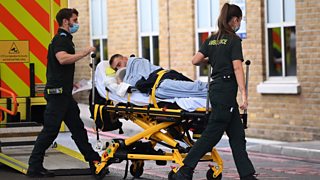
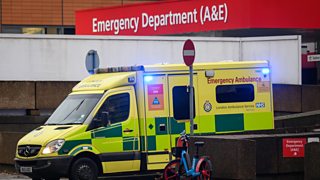
Ambulance response times, teacher pay and Irish pubs
How long are people really waiting when they call 999 for an ambulance?
-
![]()
How we shook the world of very large numbers
How an edition of More or Less influenced the naming of enormous numbers
-
![]()
A&E delays and deaths, religious identity in N Ireland and naming the monster numbers
How many people may be dying because of treatment delays in the NHS?
-
![]()
Can China's data on Covid deaths be trusted?
Is China under-reporting data on Covid related deaths?
-
![]()
Irish pubs - a global numbers game
Are there more Irish pubs in Ireland than in all other countries combined?
-
![]()
What are the numbers of 2022?
Tim Harford and guests on the numbers that help tell the big stories of the year.
-
![]()
Qatar World Cup: The pressure of penalties
We analyse World Cup penalty data to ask what boosts the chance of scoring from the spot
-
![]()
Why is data so important in determining how we live?
Tim Harford on how good policies depend on the availability of reliable statistics
-
![]()
World Cup in Qatar: How many migrant workers have died?
Examining the wildly varying estimates of deaths in the run-up to the tournament in Qatar
-
![]()
When do food shortages become a famine?
With Somalia in crisis, we ask how data is used to officially declare a famine
-
![]()
A $220 billion World Cup?
Has hosting the Fifa football World Cup really cost Qatar $220bn?