Shifting social norms and promoting gender equality through media
Learning and practice briefings bring our research together to show how creative thoughtful storytelling about people鈥檚 lives can help communities rethink deeply rooted norms.

Try to remember the first time you saw yourself in the media. Not just someone who looked like you, but someone who lived a life that felt recognisable. What did that version of you look like? What were they allowed to do? To say? To become?
For many people, that moment either never came, or arrived shaped by limitations: a girl who is dutiful but silent; a woman who leads but pays the price; a man who must always appear strong, even when he is not; a boy learning early to hide his emotions and perform strength. Lives determined by expectations that quietly shape what is considered normal, aspirational and inevitable.
Across the world, those expectations continue to shape real lives. They influence whether a girl stays in school, whether a woman can access healthcare, whether she is safe, whether she is heard. They also shape men and boys, narrowing what is acceptable, rewarding dominance and control, and leaving little space for vulnerability, emotional openness or shared decision-making. These are not always formal rules, but unwritten, shared assumptions passed down in families, reinforced in communities and embedded in institutions. They tell us who should speak, who should decide, and who should lead.
Media has a key role in shaping these norms and creative storytelling is a tool that can open up conversations about issues that are often difficult to discuss, helping people see familiar situations in a new light. People must see and hear alternatives: stories that reflect their realities while challenging assumptions about gender roles and power.
A story can place us inside a character鈥檚 head and make us feel the tension between what is expected and what might be possible. It can show us alternatives without declaring them. When a listener or a community hears a father reconsider his stance on his daughter鈥檚 education, or watches a woman step into leadership in a moment of crisis, or sees a woman discussing child-birth spacing with her husband for the first time, or a man supporting that decision openly, or taking the lead in caring for his children, it creates a small opening for reflection, dialogue and change.
91福利社 Media Action works with local partners to create programmes that do exactly this.
Read our new practice and learning briefings
-
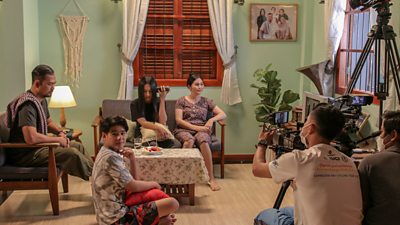
Advancing gender equality through media and communication
Media can advance gender equality by engaging audiences at scale. Through long-running brands, relatable drama, factual formats and outreach, we model alternative roles, sustain discussion and link audiences to services for sexual and reproductive health and rights, gender-based violence, education, economic participation, civic engagement and crisis response. Drawing on our experience from across Asia, Africa and Eastern Europe, this brief explores how mentoring, supporting gender responsive policies and monitoring can ensure inclusive practice is embedded behind the scenes as well as on air 鈥� key to ensuring content is made for all audiences, representing them in all their diversity. -
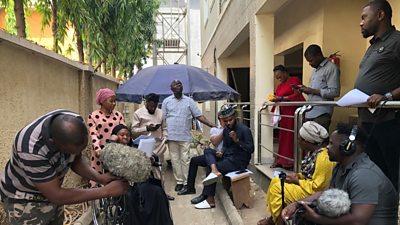
Using media and communication to support social norms change
This brief is a 鈥渉ow to鈥� and draws on our learning from social norms work conducted across diverse and fragile cultural and geographic contexts. It explores how media can more effectively influence collective behaviour 鈥� outlining best practice in designing programmes and content to help shift norms, and supporting a stronger media ecosystem to sustain them. It distinguishes between functional norms 鈥� immediate, situational rules shaping day-to-day behaviour 鈥� and deeply rooted norms 鈥� underlying beliefs about gender, authority or protection that sustain many everyday behaviours. It also introduces our 鈥渟ocial norms masterclasses鈥� to help media professionals develop interventions that can shift discriminatory norms.
From storytelling modelling new possibilities to factual programmes that inform and engage audiences, media can help shift norms - how people think about what is fair, possible, and acceptable. Change happens not only through the stories being told, but where they are told and who is able to tell them. By opening space for new voices and perspectives, we help societies rethink what is normal and imagine stronger, more inclusive societies.
At first, we only heard male voices. Now, we鈥檙e hearing women too.
In Ukraine, a series of stories, produced by our media partner Suspilne (Public), profile women who have risen to become leaders during the war - a doctor who braves minefields, a director of a rehabilitation centre who fights for an equal society
In the stories of these women, the life of the country is reflected ... One of the heroines protects us on the front line, and another fights for equal rights for everyone in Lviv. War limits us and makes us crave revenge, but these women do not forget dignity and love. They inspire.
Other initiatives combine media with community dialogue, from youth discussions to radio listening groups, creating spaces where people can question assumptions and talk openly about gender roles and rights.
I listened [to] the programme with my uncle who believed that FGM is our culture and part of the religion. But, at the end of the programme, I could see in his eyes that the programme made him think about the facts he just heard from the experts.
In Zambia, Tikambe! (Let鈥檚 Talk!), a radio programme addressed norms around silence in families when it comes to sensitive topics such as SRHR.
鈥淏efore the [Tikambe!] programme it was hard to talk to our children鈥� about issues to do with sex.鈥�
Change rarely happens all at once. It emerges gradually, through exposure, conversation, and the steady expansion of what people feel able to imagine for themselves and for others.
Our practice and learning briefings are an invitation to look more closely at that process. To consider how media can do more than reflect the world as it is, and instead participate in shaping what it might become.

Search by Tag:
- Tagged with Research Research
- Tagged with Women and girls Women and girls